
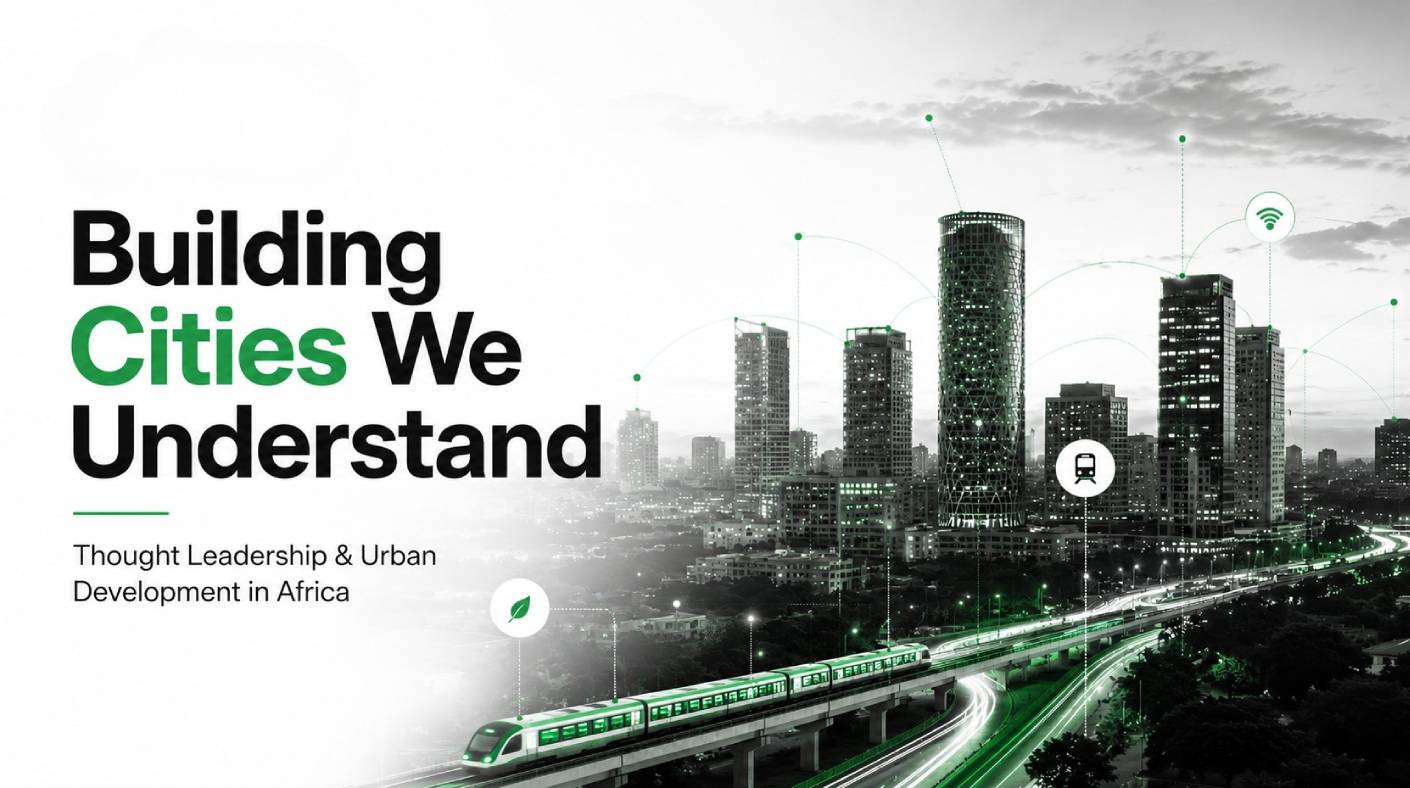
Urban development across Africa is accelerating rapidly, cities rising, transport systems evolving, and “smart” infrastructure being layered onto already complex cities. But beneath this visible progress is a quieter issue that rarely gets enough attention:
We are building faster than we are collectively interpreting what we are building. And that gap, between infrastructure and shared understanding, is becoming one of the defining challenges of African urban development.
The Real Constraint Is Not Physical. It Is Interpretive. Most urban conversations focus on outputs: roads, housing, energy systems, digital platforms, mobility networks.
But cities are not just systems of construction. They are systems of comprehension.
When people do not fully understand how urban systems connect, or how decisions are made, even well-designed infrastructure becomes disconnected from everyday experience.
The result is familiar:
- Infrastructure that exists but is under-optimized
- Innovation that is visible but not fully adopted
- Urban systems that feel fragmented despite investment
This is not a failure of development. It is a gap in collective sense-making.
Why Thought Leadership Is Becoming Part of Urban Infrastructure
Across emerging economies, thought leadership is evolving beyond communication.
It is becoming a functional layer of urban development.
Not because it builds roads or bridges, but because it builds alignment.
Through structured conversations, digital convenings, and knowledge-sharing platforms, stakeholders are able to:
- Translate complexity into clarity
- Align public and private perspectives
- Interrogate assumptions about “smart” development
- And build shared language around urban progress
In this way, thought leadership is quietly becoming part of how cities operate, not just how they are described.
The Shift From Building Cities to Making Sense of Them
African cities are not lacking ambition.
What they often lack is a shared framework for interpreting that ambition as it unfolds.
Without that framework, even well-intentioned development risks becoming fragmented in perception, understood differently by policymakers, operators, and citizens.
This is why the next phase of urban development is not only technical.
It is cognitive.
Cities must not only function. They must also be understood.
The Role of Platforms Like SmartCity Engage by SmartCity PLC
Within this evolving context, platforms like SmartCity Engage have emerged to contribute to a broader ecosystem question:
How do we deepen the way we think about cities while they are still being built?
Not as an event.
Not as a campaign.
But as an ongoing space for reflection on infrastructure, innovation, governance, and the lived realities of urban growth in Africa.
The value is not in broadcasting answers, but in consistently engaging better questions.
Because the future of African cities will not be defined by infrastructure alone.
It will be shaped by how well that infrastructure is understood, interpreted, and collectively navigated.